Gardens under threat
Keith Parkins | 26.03.2007 16:43 | Climate Chaos | Ecology | Social Struggles
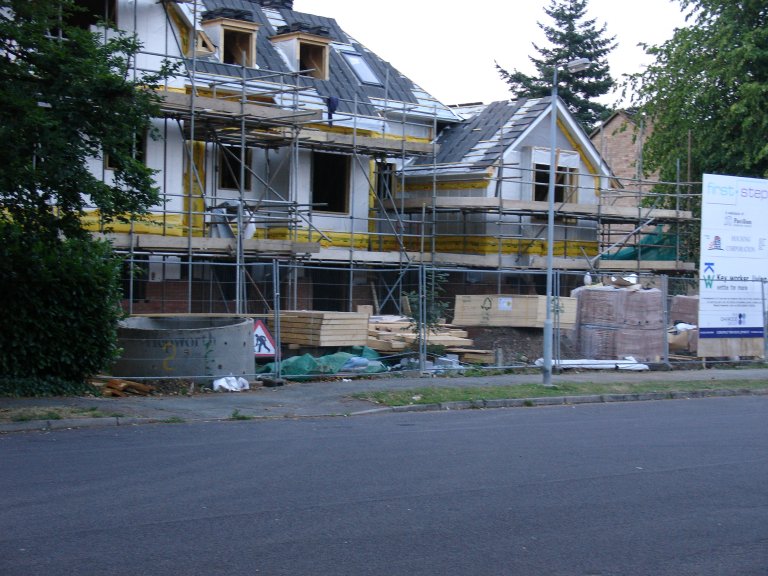
suburban garden turned into a building site
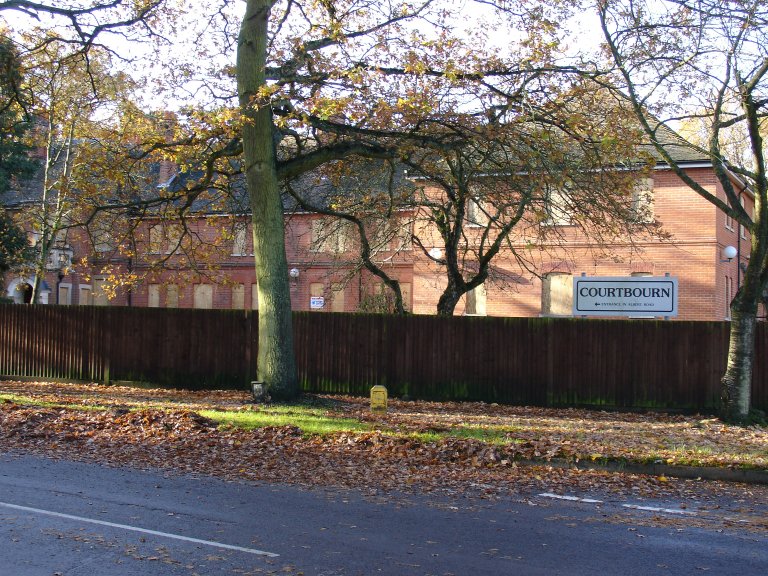
Courtbourn old folk kicked out for redevelopment
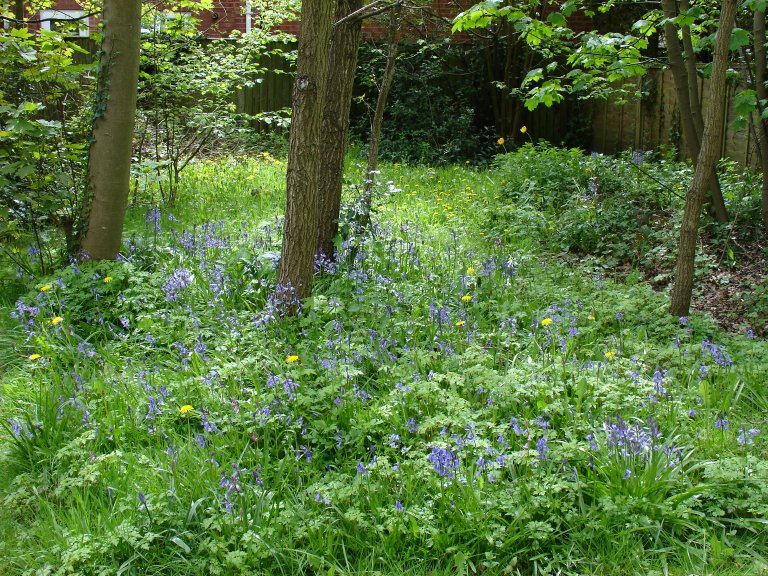
back garden woodland glade
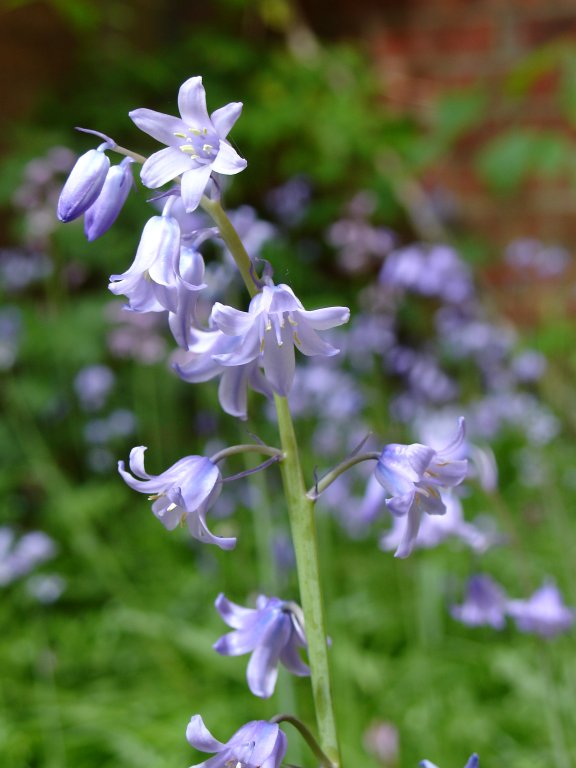
bluebell
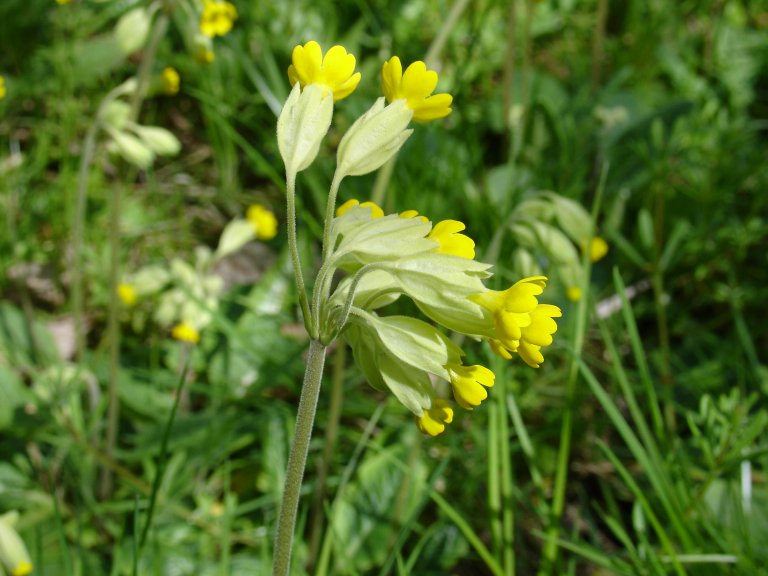
cowslip
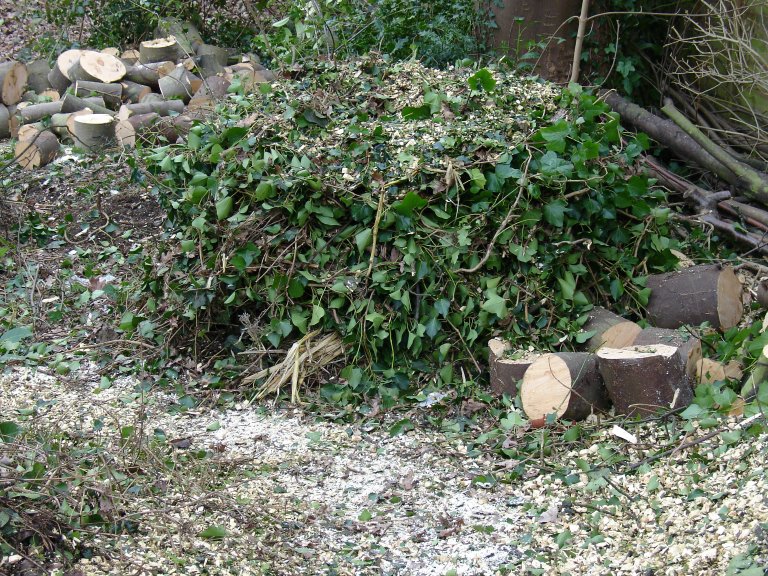
compost heap
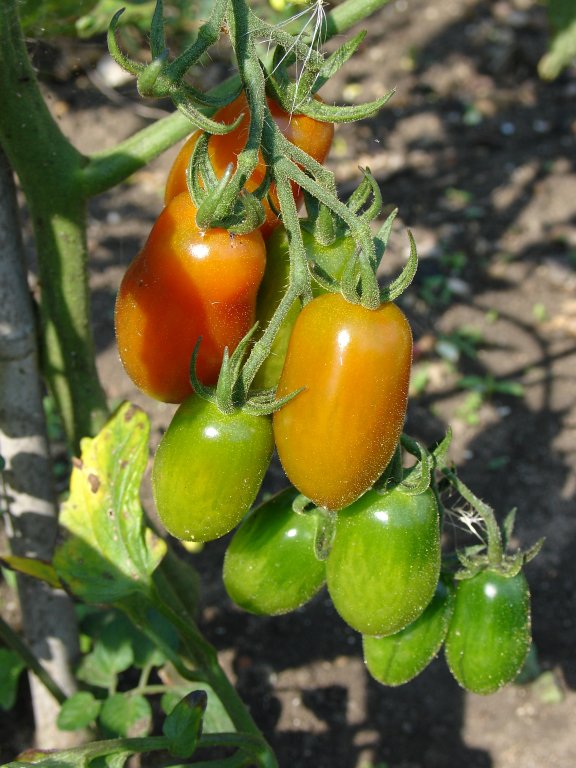
tomatoes var Washingborough Santa
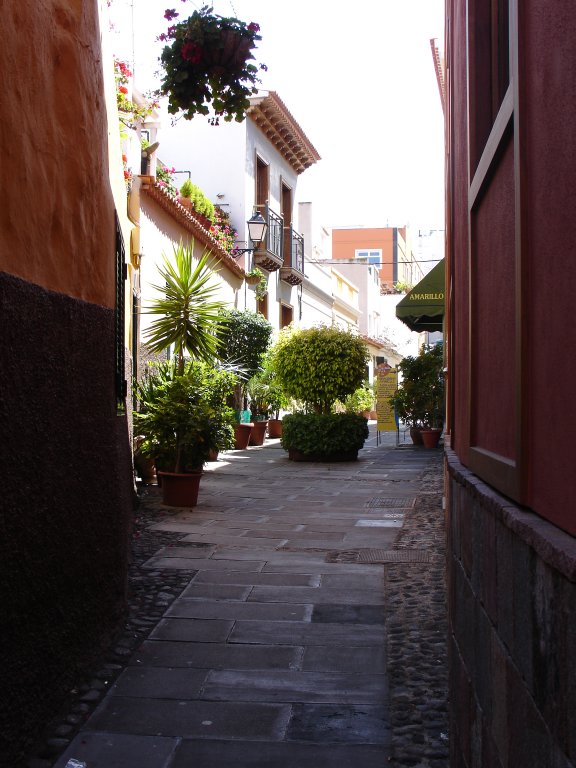
greening of urban space
The British have a love-hate relationship with their gardens.
They spend millions on their gardens, and yet they dose anything living with toxic chemicals, cover their soil with gravel, bricks, wooden planking.
It is almost as if a garden is ok, so long as it contains nothing living, nothing that moves.
But much as householders are a threat to their own gardens, or at least the living vitality of the garden, a far bigger threat is greedy developers.
We would all agree developers should build on brownfield sites, bring back into use contaminated land. Not something developers like, because it costs them money.
A quirk of Planning Guidance Note PPG3, or maybe it was deliberate intent, is that gardens are classed as brownfield sites. This means that greedy developers have no problem acquiring a large old house with a large garden, knocking it down, building an ugly block of flats, usually not in keeping with the character of the area, and covering what little remains of the garden with tarmac for car parking.
This is what happened in my road. A small house, what remained of the coaching block for an old house which has long gone, a large garden complete with a large Edwardian greenhouse, a couple of mature trees, all destroyed for an ugly 3-story block of flats and three terraced houses, what little remained of the garden, one of the finest gardens in the area, was covered in tarmac, not even somewhere for the tenants to hang out their washing. That which was built is completely out of character with the area. At the end of the road is a circle of Edwardian or possibly Victorian houses designated as a Conservation Area.
Similar has happened in surrounding roads, if not a block of flats, houses are squeezed onto what was gardens, a process known as 'infilling'. One of the few remaining large old houses of the area, now a residential home for the elderly, has had its woodlands sold off and is now occupied by several blocks of flats. Another old house, until recently a home for the elderly, has been closed down, the old folk kicked out in order that the County Council can sell the site for development to pay for extensive refurbishment of the County Council offices.
Gardens are important for several reasons.
Gardens provide an important habitat for wildlife. The BUGS project run by Sheffield University has shown just how important.
 http://www.bugs.group.shef.ac.uk/
 Gardens create microclimates, making cities warmer in winter, cooler in summer.
A study by the Environment Committee of the London Assembly reported that a fifth of the Capital's land is made up of private gardens and that these gardens support a wide variety of birds, insects and plants, that could not survive in the city's parks.
Gardens are a place where we can sit and relax, enjoy peace and quiet. At least they are if you do not have the misfortune to live next door to the Neighbours from Hell.
Gardens can provide us with fresh seasonal produce, reducing food miles, and providing us with much needed exercise. If we grow heritage varieties, we help safeguard our genetic heritage.
http://www.indymedia.org.uk/en/2007/02/361644.html Gardens provide somewhere where we can compost all our green waste. In doing so, not only do we reduce the amount of waste going to landfill or incineration, we also improve our soil structure and fertility.
Many councils, under the guise of recycling, and against the strongly expressed wishes of local residents, are introducing fortnightly collection of domestic waste. Many are even encouraging householders to put out green waste, including gardening waste, to artificially inflate their recycling figures.
http://www.indymedia.org.uk/en/2007/02/362125.html Gardens provide somewhere where we can compost that green waste and put it to good use. What was waste, now becomes a valuable resource.
Around 60% of domestic waste is organic matter, much of the remaining 40% is packaging. When you compost in your back garden, not only do you significantly reduce the waste leaving your household, but you are helping to maintain the structure and fertility of the soil in your garden.
Gardens help soak up rainwater, help reduce surface runoff and the frequency and intensity of flash floods.
Gardeners collect water off their sheds and greenhouses in their water butts for later use in their gardens. Water that soaks into gardens, that is not taken up by the plants, helps recharge our depleted underground aquifers.
We lock up carbon in the plants in our gardens.
I am fortunate in that I have a large garden. Half is a wildlife area, a little woodland glade, half is used for growing food. Recently, and with great reluctance, I have had to cut down a few of the trees, as everything was being shaded out. Nothing though was wasted, the small stuff chipped, logs used to make raised beds., long straight branches are used for poles for beans and tomatoes. The trees have not been grubbed up, the roots are still in place, effectively the old medieval woodland practice of copicing. Shoots will grow up and in a couple of years these will produce long straight poles for use in the garden. A small area is down to grass, a place to sit and relax on a hot summer's day under the shade of a tree.
Gardens are multi-functional, a place to grow food, to relax, to exercise, to dry ones clothes.
The next best thing to a walk in unspoilt countryside is to relax in our garden or to tend our crops.
We are committed to reducing our carbon emissions, though by nowhere nearly enough. People who lack a garden, not even a back yard, have nowhere to hang their clothes to dry. If not a trip down to the laundrette, they are forced to invest in a tumble dryer, which is extremely expensive to run in terms of power consumption, equally expensive to run in terms of its environmental impact. All for the want of a washing line.
HDRA, or Garden Organic as they are now known, is taking the lead in calling for a change to PPG3 to remove the definition of gardens as brownfield sites. They are asking that people lobby their Member of Parliament and sign their on-line petition.
http://www.gardenorganic.org.uk/saveourgardens/index.php Greedy developers are not the only threat to our gardens. Not content with cutting refuse collection services to once a fortnight and billing us for the privilege of a poor service, the new rating system may include a Garden Tax.
It is not only gardens that are at risk. So too are allotments and school playing fields.
http://www.indymedia.org.uk/en/2006/10/353986.html Slowly slowly, our green spaces are being eroded and will continue to be eroded unless we take a stand.
Websites
http://www.hdra.org.uk/ http://www.thefoodproject.org.uk/ http://www.foodnotlawns.com/ http://www.tlio.org.uk/ http://www.seedysunday.org/ http://www.seedambassadors.org/ http://www.realseeds.co.uk/ http://www.thomasetty.co.uk/ References and further reading
Chris Baines, How to Make a Wildlife Garden, Elm Tree Books, 1985
Lester R Brown, Plan B 2.0, Norton, 2006
http://www.earth-policy.org/Books/PB2/Contents.htm Cindy Engel (ed), The Gaia Book of Organic Gardening, Gaia Books, 2005
Kate Evans, Funny Weather, Myriad Editions, 2006
http://www.heureka.clara.net/books/funny-weather.htm Heather Coburn Flores, Food Not Lawns, Chelsea Green, 2006
Dominique Guille, The Seeds of Kokopelli, Association Kokopelli
http://www.heureka.clara.net/books/kokopelli.htm Fred Harrison, Boom Bust: House Prices, Banking and the Depression of 2010, Shepheard-Walwyn, 2005
Andrew Kimbrell (ed), Fatal Harvest: The Tragedy of Industrial Agriculture, Island Press, 2002
http://www.fatalharvest.org/ Keith Parkins, Sowing Seeds of Dissent, Indymedia UK, 6 September 2004
http://www.indymedia.org.uk/en/2004/09/297391.html Keith Parkins, Curitiba – Designing a sustainable city, April 2006
http://www.heureka.clara.net/gaia/curitiba.htm Keith Parkins, Allotments at risk, Indymedia UK, 20 October 2006
http://www.indymedia.org.uk/en/2006/10/353986.html Keith Parkins, Seedy Sunday Brighton 2007, Indymedia UK, 6 February 2007
http://www.indymedia.org.uk/en/2007/02/361644.html?c=on Keith Parkins, Green waste recycling, Indymedia UK, 12 February 2007
http://www.indymedia.org.uk/en/2007/02/362125.html Keith Parkins, Recycling and waste reduction being used as an excuse to cut services, Indymedia UK, 19 February 2007
http://www.indymedia.org.uk/en/2007/02/362712.html Keith Parkins, Do we need industrial agriculture?, Indymedia UK, 19 February 2007
http://www.indymedia.org.uk/en/2007/02/362714.html?c=on Keith Parkins, Opposition grows in Rushmoor to cuts in refuse collection, Indymedia UK, 27 February 2007
http://www.indymedia.org.uk/en/2007/02/363743.html?c=on Keith Parkins, Seed saving, Indymedia UK, 26 March 2007
Keith Parkins, Fortnightly collection of rubbish an unmitigated disaster, Indymedia UK, 26 March 2007
Keith Parkins, Bad Food Britain, to be published
http://www.heureka.clara.net/gaia/ Keith Parkins and Mark S Brown, Acrimony in the UK: Housing privatisation, speculation & land ownership, Indymedia UK, 1 March 2007
http://www.indymedia.org.uk/en/2007/03/363886.html Pauline Pears (ed), HDRA Encyclopedia of Organic Gardening, Dorling Kindersley, 2001
Michael Pollock (ed), RHS Fruit and Vegetable Gardening, Dorling Kindersley, 2002
John Seymour, The New Complete Book of Self-Sufficiency, Dorling Kindersley, 2003
Jack Shamash, the Great Graden Grab, The Ecologist, February 2007
Soil of the Century, SchNEWS, 2 February 2007
http://www.schnews.org.uk/archive/news574.htm
Keith Parkins
 Homepage:
http://www.heureka.clara.net/gaia/
Homepage:
http://www.heureka.clara.net/gaia/







Comments
Display the following comment