this is just a test post from a workshop
just testing, 17.03.2004 19:49
This is the second part of a series of articles on the tenth anniversary of the protests against the construction of the infamous M11 link road that was bulldozed through East London. We staged Operation Roadblock as a month long period of continuous direct action against all the destruction caused by the road. This part of the protest resulted in more and more people becoming involved for the first time in direct action campaiging on many other issues besides transport.
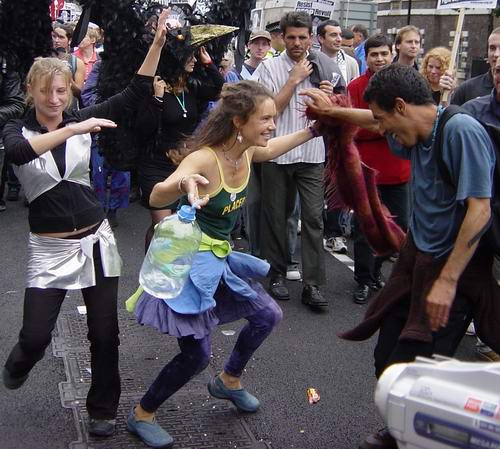
On the outside of destruction site fences
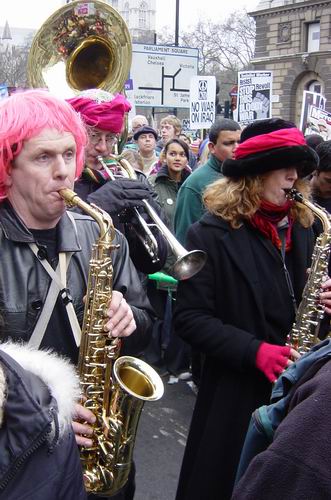
Sitting on the fence waiting for a gap in the cops and guards
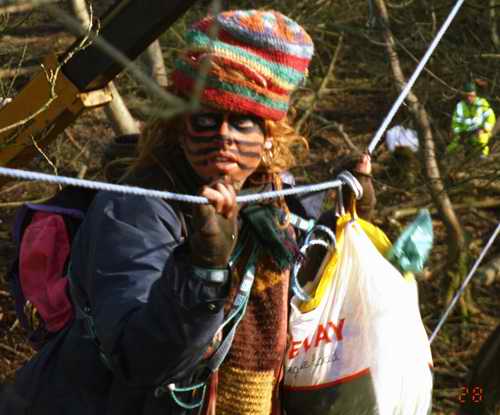
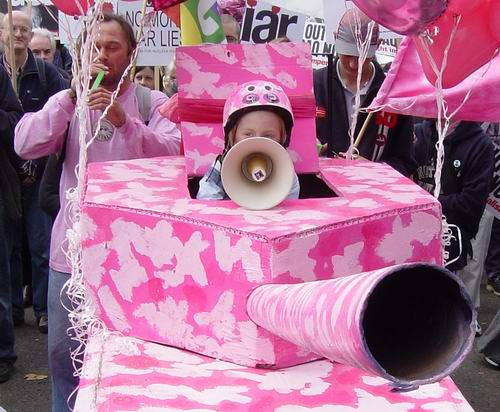
Some of us had read about and been tremendously inspired by the Franklin River blockade in Tasmania. This was a massive and completely successful Non Violent Direct Action campaign against an ecologically disastrous plan to dam a river. The Franklin River campaign had received huge coverage on Tasmanian TV and as a result, thousands of people had pledged to take part in a continuous daily rota of blockading. Our ambition was to create something similar with such a sustained level of protests that no destruction work could take place for an entire month. For several weeks we flyposted and networked massively with other activist groups from all around the country. We asked them to pledge support for our campaign and book several days at a time when they’d be prepared to join us and take part in the protests.
There was still hardly any alternative media in those days. Undercurrents were just starting up that same year. Their video clips were excellent but by the time undercurrent’s videos had been edited, duplicated on VHS and sold, the contents could be months old. We had continued to improve our links to the mainstream media. We saw this as vital, not just as a way of attracting new support for the campaign, but also so as to continually pile on to the embarrassment effect being experienced by the government with their idiotic 23 billion pound road spending program. Anti-roads protests were now starting to happen in other parts of the country at Solsbury Hill - near Bath and Preston and the government couldn’t just ignore them as their coverage was being splashed across TV screens and newspaper front pages on a regular basis.
Two skipped ‘286 computers running Windows 3.1 had been added to our frantically busy office. Fax modems had only very recently become available and we added a newly bought modem to one of these PCs. By today’s standards it was absurdly expensive at over £180 but it turned out to be a really worthwhile investment that enabled us to achieve more and more widespread media coverage. By just clicking a few buttons on the computer, we were able to leave it unattended faxing out our press releases to dozens of newsrooms during the evening, while we relaxed in the pub. One of our volunteers also worked at Greenpeace and she said they had nothing as sophisticated as that. They still relied on a volunteer pushing a bit of paper repeatedly through a fax machine and manually dialling the numbers for hours on end.
In their usual secretive manner, the police had always used code words to name their large-scale operations. Their siege of Wanstonia had been called "Operation Barnard". So for our epic planned campaign of direct action we came up with "Operation Roadblock". The name did lack a little of the imagination of the names of previous actions. For instance when the police had staged "Operation Market Garden" at Twyford Down we had organised the amazing "Operation Greenfly" as a direct response. But the name Roadblock sounded grand and in-your-face so we stuck with it.
The kick off date for Operation Roadblock was set for March 15'th - the Ides of March. In the run up to it, we sent out ominous press releases warning the DoT and their contractors to "Beware the Ides of March!” The whole build up to Roadblock was immense. We would have looked very foolish if no one had turned up, so it was a great relief that plenty of enthusiastic supporters did appear on the very first day. The volunteers who had travelled here from all over the country congregated in one of the many squatted houses in Fillebrook Road. Here we served them breakfast followed by legal briefings, instruction in non-violent direct action and then exercises in fence climbing - all of this in front of TV cameras which in those days we didn’t mind inviting in.
After all this preparation, we led everyone in a merry but decidedly nervous throng to the outside of the destruction sites ready to do battle with the forces of darkness. The first day was relatively easy. The cops pretty much stood back and let us have our day in front of the rows of journalists who were present. Destruction work was temporarily stopped to much cheering.
On subsequent days when fewer journalists were around, the cops made things much harder and scarier. The whole protest was incredibly, unrelentingly full on. More so at this stage of the campaign than at any other time and it was extraordinary how courageous and committed people were. We had to dodge all the police running up and down the outside of the fences surrounding the destruction sites. We had to very rapidly climb the eight-foot high smooth wooden fences topped with barbed wire. If you were too slow then the cops would grab you by the ankles and be quite likely to roughly pull you down, not caring if you fell on your face or if you became snagged on the barbed wire. On the inside of the fence you’d be facing a line of security guards, some of them known to be violent. You’d wait sitting on top of the fence until the guards nearest to you were distracted chasing someone else. Then you’d have to jump down eight feet and sprint at incredible speed hotly pursued by security guards, zigzagging through mud, leaping over piles of rubble and building materials and then scramble onto any of the machinery operating inside.
Once you were on the machinery, it was best to climb to the highest and most inaccessible part to avoid the grasping hands of security guards. The more hardcore activists would use a bicycle D lock to lock themselves by the neck to some part of the machine. It could then take hours for heavy duty cutters to be used to free them. To my mind, the best machines to go for were the very tall pile sinking cranes. The view right from the top of the derrick was always spectacular though somewhat depressing as you could see the linear swathe of destruction stretching out in both directions. Once any person was on any of the machines, the driver would then have to stop the engine. Machinery stopped = destruction stopped = Result! Huge relief. It was usual to stay up on a crane until knocking off time when we'd all troop out along with the rest of the workers. One time though when a critical concrete pour had been disrupted, protesters had sleeping bags and food supplies brought in by special delivery so they could spend the night up cranes.
Download this article in pdf format>>